It is 6:23pm after a packed day of client meetings. The wealth advisor just wants to get home to his wife and kids.
But before logging off, he checks to see if there are any client meetings tomorrow.
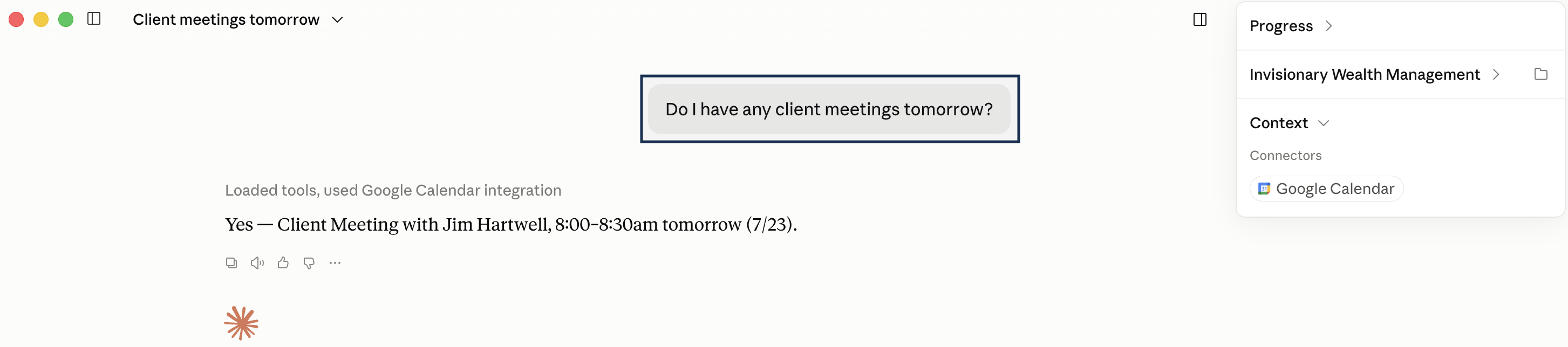
There is. Jim Hartwell scheduled a last-minute meeting for 8am. And unfortunately, the deck for that meeting is not ready either.

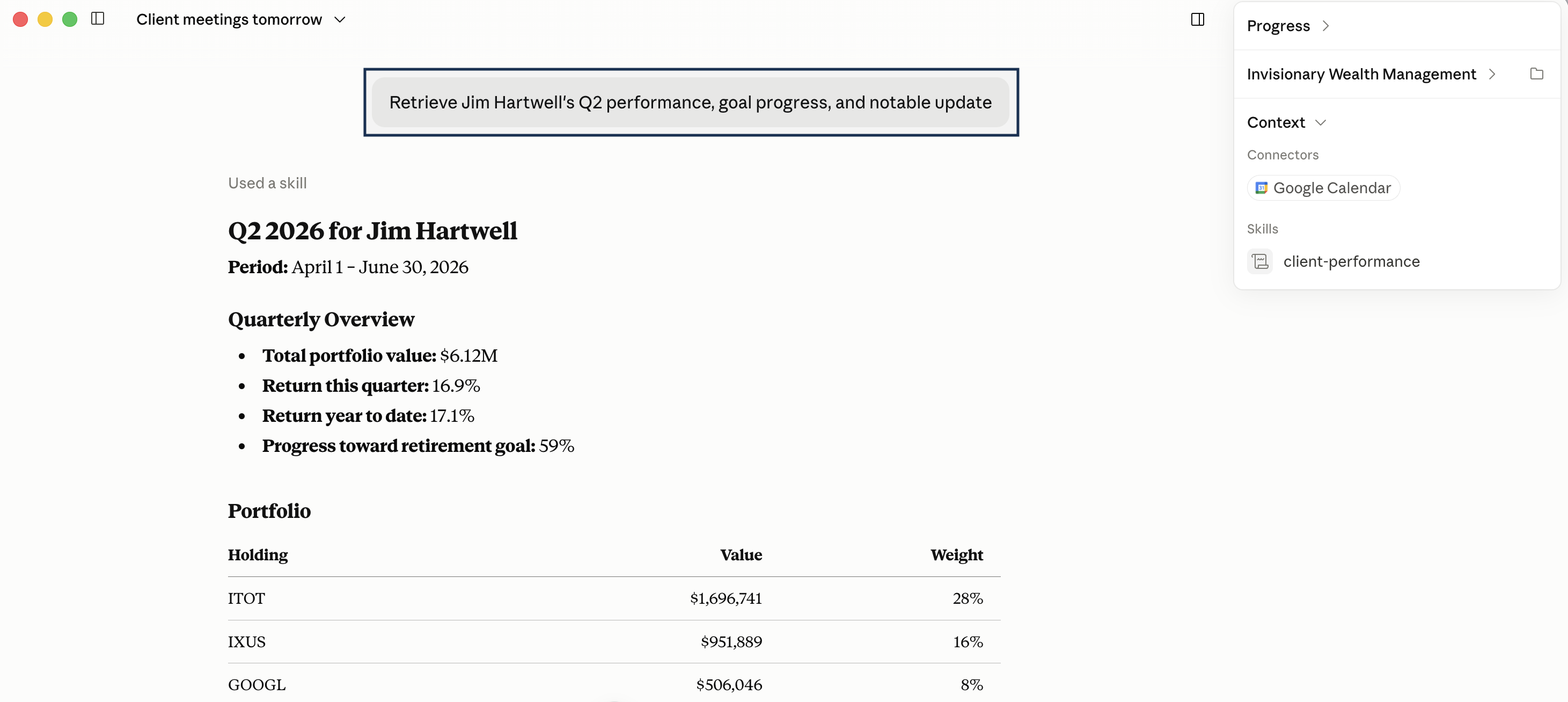
But fortunately, the wealth advisor has AI and it's connected to their performance reporting system and client relationship management (CRM) software. AI quickly gathers the relevant financial information for Jim Hartwell. The advisor quickly scans the output to validate all the numbers are correct.
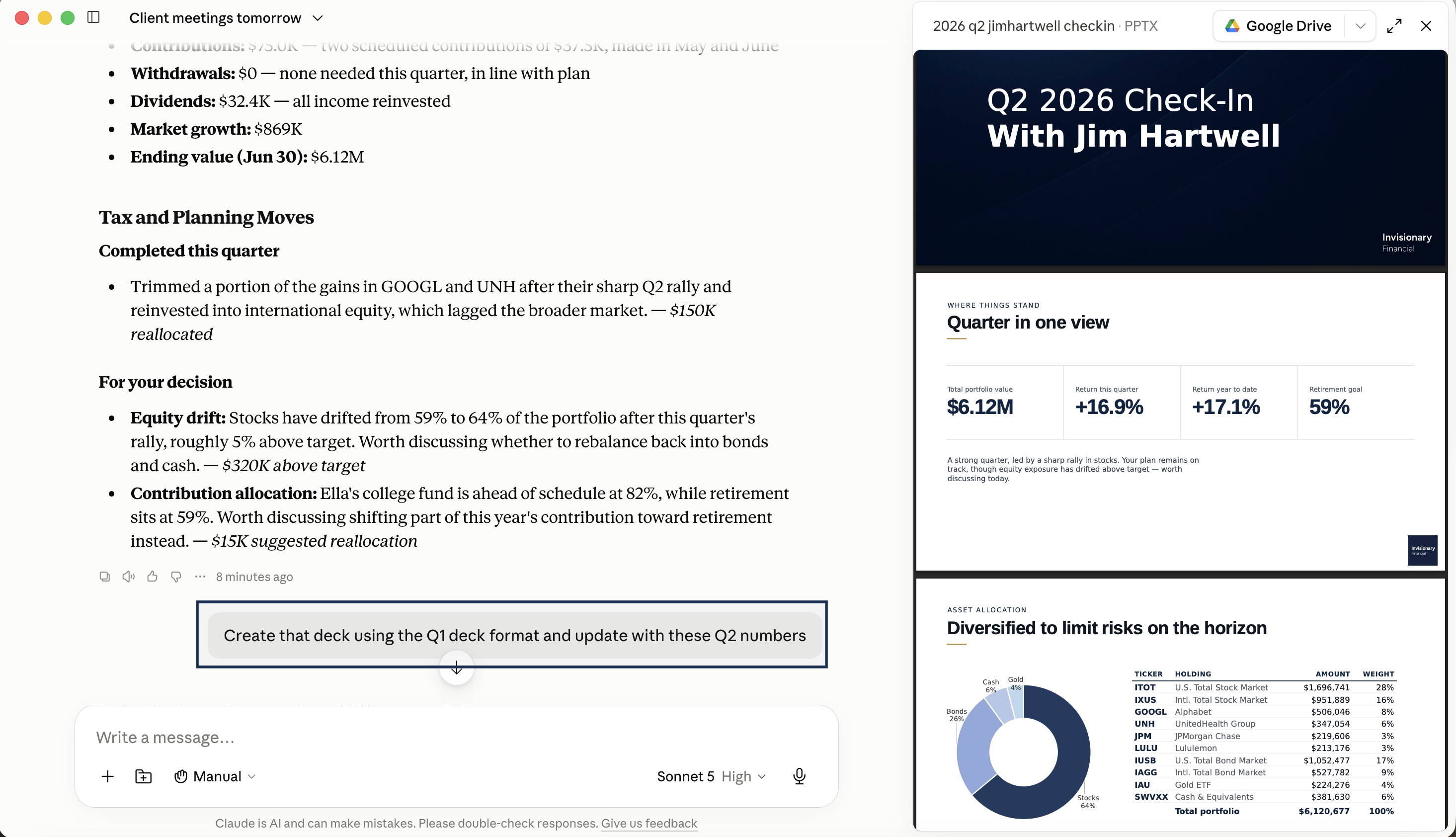
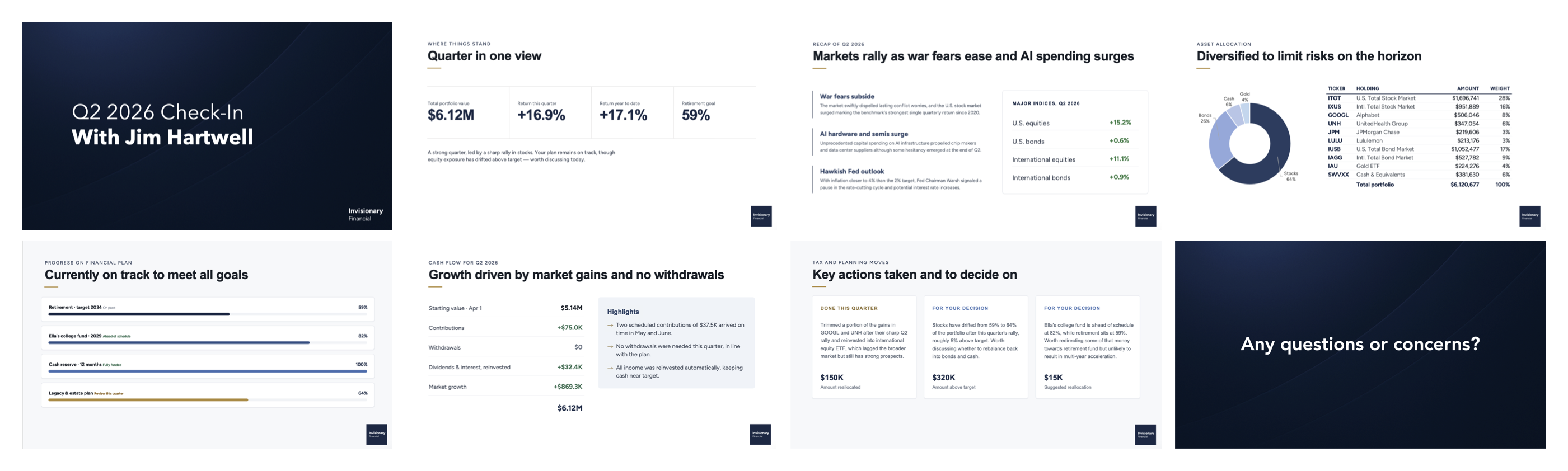
Then the AI uses the Q1 deck as the base and creates a Q2 deck for Jim Hartwell. While the wealth advisor begins to pack up his bag, the AI begins to update those numbers in the deck. Within minutes the deck is ready for the wealth advisor to review. Everything looks as expected.
Although ... during the last meeting, Jim asked a lot of questions on the economic outlook. The wealth advisor does write a quarterly newsletter. But Jim never seems to read it. Why not just let AI convert it into slide format?
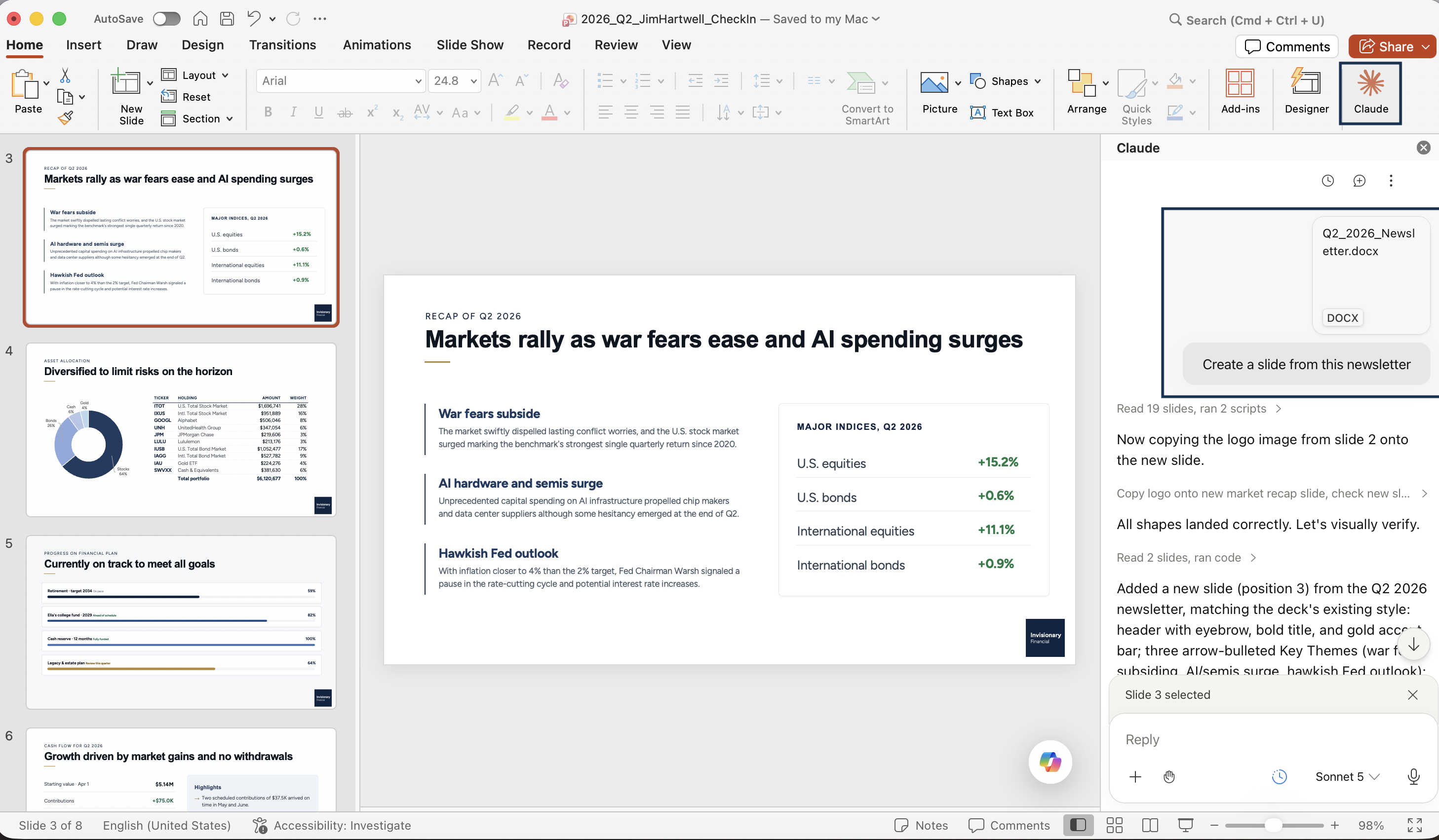
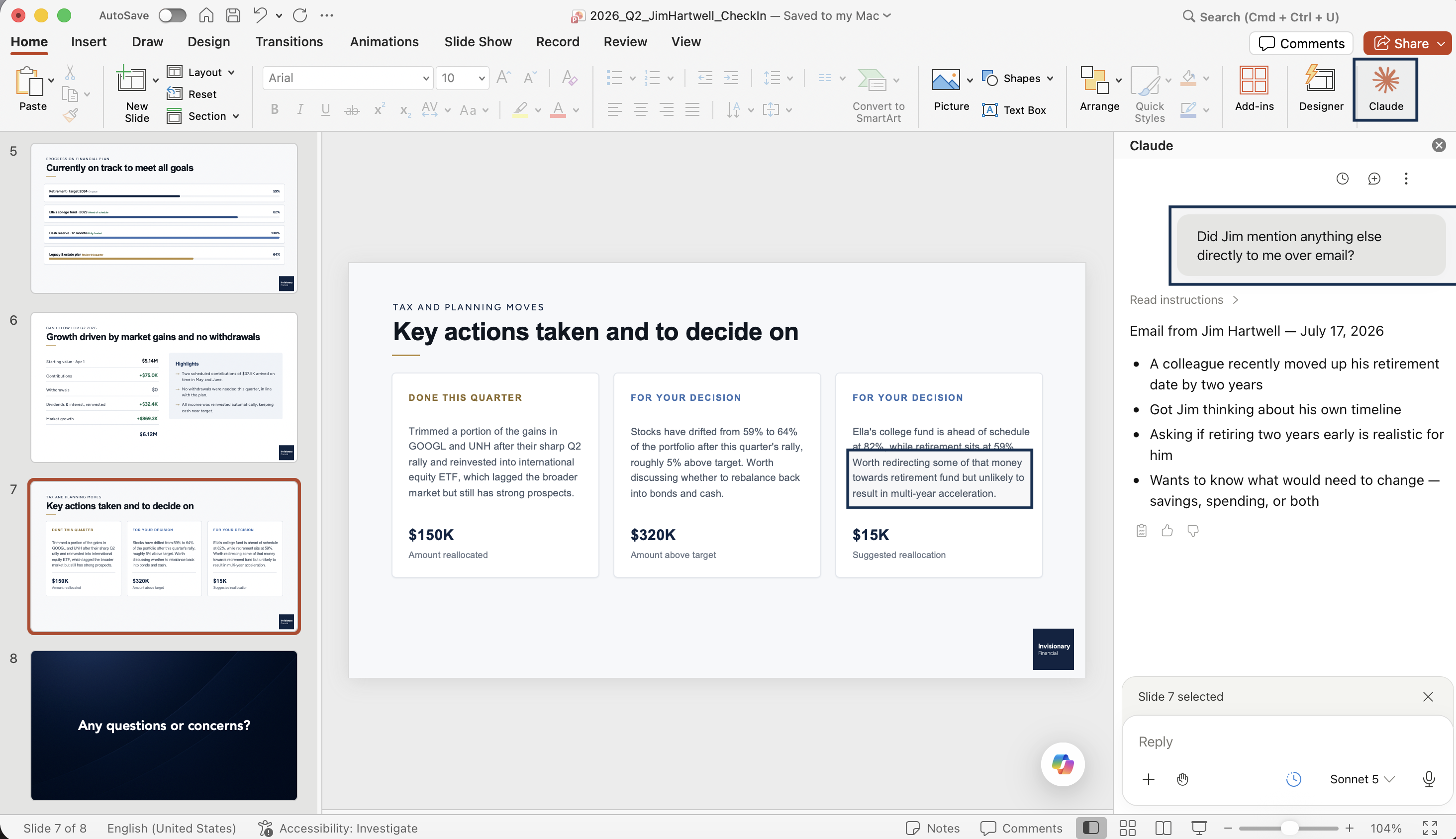
He gets to the final slide of key actions and next steps. The notes AI pulled from the CRM were good. But the wealth advisor remembered something that Jim mentioned to him directly via email about a potential early retirement.
The Outcome
30+ minutes less per deck × 120 clients × 4 meetings per year = 240+ hours saved per year.
How much is that worth if it saves an Analyst all that time? $5,000? $10,000? How much is that worth if it saves a Wealth Advisor all that time? $20,000? $30,000? More?
This is AI that generates an ROI. This is AI that handles the tedious work (slide creation) so the human can focus on the high-value work (relationship management).