The CFO asked AI a simple question: "What are some ways a CFO could address the topic of increasing revenue yet declining margins at an upcoming Board of Directors meeting?" The answer comes back fast and reasonable. It is also close to useless.
The AI has no idea what type of CFO is asking. The CFO of a twenty-person local business or a Fortune 500 corporation. The CFO of a software company, an auto-parts manufacturer, or a professional service. The CFO of a grow-at-all-costs startup or a margin-focused mature business. With no way to tell these apart, the AI reaches for the answer that fits all of them at once. That answer is the least common denominator, and it reads like it. Generic input yielded a generic output.
The Early Days With "Prompt Engineering"
The early fix was to supply the missing context by hand. This practice, known as "prompt engineering", focused on providing AI robust and structured information so AI could produce something useful. It helped. The outputs improved. It also took time, sometimes a lot of it. Writing the perfect prompt could take as long as doing the work by hand, which defeated the purpose. Then, in late 2024, the equation changed.
The Arrival of the MCP
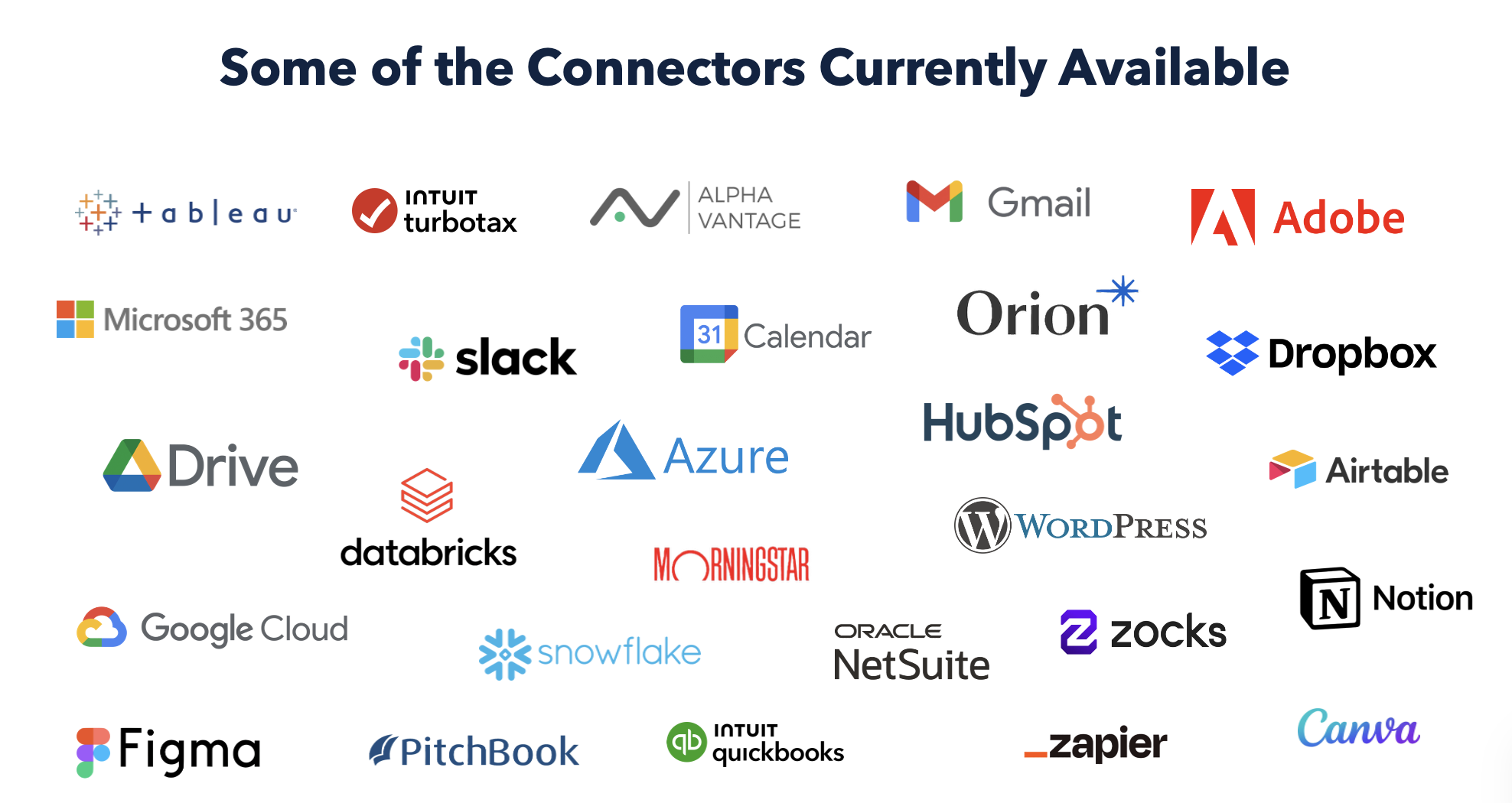
Model Context Protocol, or MCP, arrived. It created a standardized way to connect AI to the software where a firm's useful context lives. In most AI applications today, MCP shows up under a friendlier label: "Connectors." They link the AI directly to the accounting platform, the CRM, or a recent board deck sitting in a shared drive. Rather than being handed the numbers, the AI goes and gets them. When asked to draft a performance slide, the system can pull financial actuals, compare them to the prior quarter, and draft realistic commentary on what actually happened. The context arrives automatically and from a wide variety of internal systems.
Risk to Carefully Consider
With any great power, there also are notable risks. Using simple passwords and other ill-advised security practices for an AI account that has access to so many systems can create cyber security risks. Forgoing robust guardrails and strong AI governance practices can create data leakage risks. Granting full autonomy to AI and removing the human-in-the-loop can create data and quality risks. As a result, it is valuable to discuss the specifics of your situation with an experienced AI expert before implementing any solution.
Other Considerations
After carefully weighing the pros/cons, some firms will decide that it is not worth it. That is fine. There are other ways to incorporate AI that do not involve MCP Connectors. Others, though, will decide the risks are worth managing with strong governance, sensible guardrails, and the right expertise in place as they have done with other technologies previously implemented. What tips the thinking is often a cost that goes unspoken. It is the price of leaving that data siloed.
According to a study by IDC Market Research, data silos could be costing businesses 20% to 30% of their revenue due to inefficiencies. Breaking down those silos previously required an enterprise budget, a team of consultants, and months of work. Today, a focused approach using the right Connectors can bridge many of those gaps for a smaller firm in sometimes just a few weeks.
A small or mid-sized business with this capability has a distinct operational advantage. AI is not just another independent application to pile onto an already crowded technology stack. Instead, Connectors allow AI to act as the coordinating layer across existing systems. It streamlines the software the firm already uses, turning isolated tools into a collaborative network. A firm that integrates its context early does not just get better answers from AI. It builds an agile, unified operation that can propel its future scaling rather than hinder it.